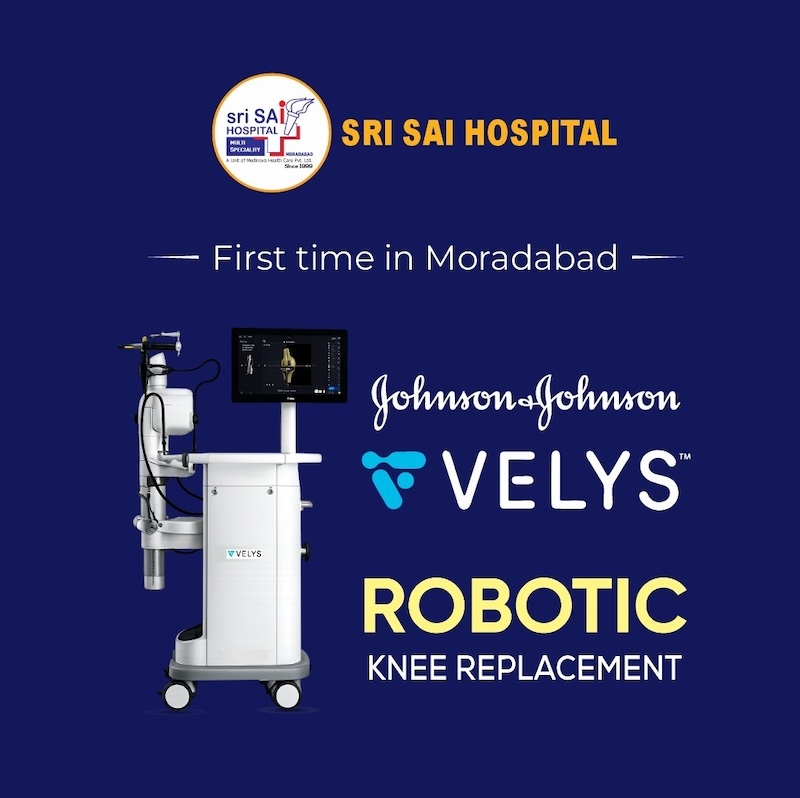
विश्वस्तरीय VELYS™️ रोबोटिक तकनीक द्वारा घुटना प्रत्यारोपण
सटीकता, सुरक्षा और बेहतर परिणामों के साथ आधुनिक Knee Replacement
अनियमित जीवनशैली, बढ़ती उम्र, गठिया (Arthritis), पुरानी चोट या घुटनों के अत्यधिक घिस जाने के कारण कई लोगों को चलने-फिरने, सीढ़ियाँ चढ़ने, बैठने-उठने तथा दैनिक कार्य करने में कठिनाई होने लगती है। जब दवाइयों, फिजियोथेरेपी और अन्य उपचारों से पर्याप्त लाभ नहीं मिलता, तब घुटना प्रत्यारोपण (Knee Replacement Surgery) सबसे प्रभावी विकल्प माना जाता है।
चिकित्सा विज्ञान में आधुनिक तकनीकों के आने से अब Knee Replacement पहले की तुलना में कहीं अधिक सुरक्षित, सटीक और सफल हो गया है। Johnson & Johnson की VELYS™️ Robotic-Assisted Solution ऐसी ही अत्याधुनिक रोबोटिक तकनीक है, जो सर्जन को ऑपरेशन के दौरान अधिक सटीक योजना बनाने और इम्प्लांट को सही स्थिति में लगाने में सहायता प्रदान करती है।
श्री साई हॉस्पिटल में डॉ. अंकुर गोयल द्वारा VELYS™️ Robotic Technology की सहायता से आधुनिक घुटना प्रत्यारोपण किया जा रहा है। यह तकनीक प्रत्येक मरीज के घुटने की संरचना के अनुसार सर्जरी को अधिक व्यक्तिगत (Personalized) और सटीक बनाने में मदद करती है, जिससे बेहतर परिणाम प्राप्त होते हैं।
VELYS™️ Robotic Knee Replacement क्या है?
VELYS™️ Robotic-Assisted Solution, Johnson & Johnson की उन्नत रोबोटिक तकनीक है, जिसे Knee Replacement Surgery को अधिक सटीक बनाने के उद्देश्य से विकसित किया गया है। यह तकनीक ऑपरेशन के दौरान सर्जन को वास्तविक समय (Real-Time) में घुटने की स्थिति, संतुलन (Balance) और इम्प्लांट की सही पोज़िशन का आकलन करने में सहायता करती है।
यह तकनीक पूरी तरह सर्जन के नियंत्रण में कार्य करती है। रोबोट स्वयं ऑपरेशन नहीं करता, बल्कि सर्जन को अधिक सटीक निर्णय लेने और इम्प्लांट की सही फिटिंग सुनिश्चित करने में सहयोग देता है। इससे प्रत्येक मरीज की आवश्यकता के अनुसार बेहतर और संतुलित Knee Replacement किया जा सकता है।
VELYS™️ Robotic Technology के प्रमुख लाभ
पारंपरिक Knee Replacement की तुलना में VELYS™️ Robotic-Assisted Surgery कई महत्वपूर्ण लाभ प्रदान करती है।
* इम्प्लांट की अधिक सटीक पोज़िशनिंग
* मरीज के अनुसार व्यक्तिगत (Personalized) सर्जिकल प्लान
* घुटने का बेहतर संतुलन (Joint Balance)
* कम दर्द एवं कम रक्तस्राव
* संक्रमण का कम जोखिम
* आसपास के स्वस्थ ऊतकों की बेहतर सुरक्षा
* तेजी से रिकवरी और जल्दी चलने-फिरने की क्षमता
* अस्पताल में कम समय तक भर्ती रहने की आवश्यकता
* लंबे समय तक बेहतर कार्यक्षमता और संतुष्टि की संभावना
* क्यों है VELYS™️ तकनीक विशेष?
VELYS™️ Robotic-Assisted Solution आधुनिक डिजिटल तकनीक, सटीक माप (Precision Measurements) और Real-Time Data का उपयोग करती है। ऑपरेशन के दौरान सर्जन प्रत्येक चरण का सूक्ष्म विश्लेषण कर सकते हैं, जिससे इम्प्लांट को मरीज के घुटने की संरचना के अनुसार सर्वोत्तम स्थिति में लगाया जा सकता है।
इस तकनीक का उद्देश्य केवल घुटना बदलना नहीं, बल्कि मरीज को अधिक प्राकृतिक अनुभव, बेहतर गतिशीलता (Mobility) और लंबे समय तक आराम प्रदान करना है। यही कारण है कि विश्वभर में आधुनिक Knee Replacement Surgery में रोबोटिक तकनीक का उपयोग लगातार बढ़ रहा है।
विशेषताएँ
* Johnson & Johnson की अत्याधुनिक VELYS™️ Robotic-Assisted Technology
* अधिक सटीक एवं सुरक्षित Knee Replacement
* मरीज के अनुसार व्यक्तिगत सर्जिकल प्लान
* इम्प्लांट की बेहतर फिटिंग एवं संतुलन
* कम दर्द एवं कम रक्तस्राव
* संक्रमण का कम जोखिम
* तेज रिकवरी एवं जल्दी चलने-फिरने में सहायता
* अस्पताल में कम समय तक भर्ती
* अनुभवी रोबोटिक जॉइंट रिप्लेसमेंट सर्जन द्वारा उपचार
डॉ. अंकुर गोयल
वरिष्ठ ज्वाइंट रिप्लेसमेंट सर्जन एवम रोबोटिक एक्सपर्ट
*यू.के. एवं जर्मनी से प्रशिक्षित*
20 वर्षों का अनुभव
घुटना प्रत्यारोपण हेल्पलाइन +91 70550 11681
श्री साई हॉस्पिटल, दिल्ली रोड, मुरादाबाद - 244001
उत्तर प्रदेश, इंडिया
Read in English